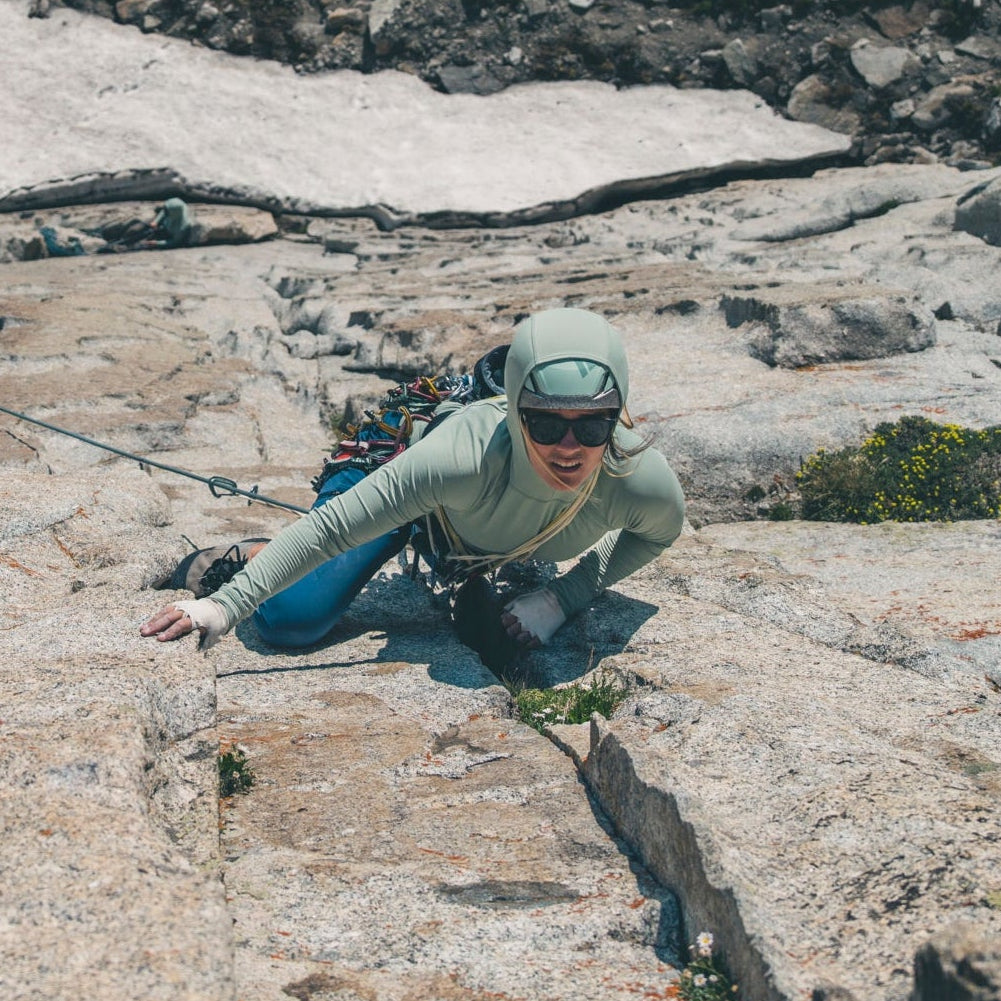
Essential apparel and equipment for high alpine hiking.
It’s time to get out of town, above the treeline, and take a hike in the mountains; embracing the feeling of traversing an alpine meadow to a clear lake below the final talus of a summit is spectacular.
Compared to other terrain, the alpine offers a unique experience; the terrain can be delicate, with sensitive alpine meadows, loose rock, and crevassed glaciers. But it is also extreme. You are at altitude, which is hard on the lungs and legs after trekking many miles, and dangerous storms can roll in without warning. But with the right gear and a good kit, you can enjoy the splendor of the mountains.
In this article, we break down the perfect mountain hiking kit, from head to toe.
ALPINE HIKING APPAREL SYSTEM
When thinking of what to wear for hiking above treeline, a key factor to keep in mind is versatility. The weather can be unpredictable, and your clothing needs to perform in a variety of conditions, from hot and sunny to sleet blowing sideways. With that in mind, it is best to stick to clothes built with synthetic fabrics—they are breathable, moisture-wicking, and comfortable for long days on the trail. Cotton is comfortable and breathable, but if it gets wet, it takes longer to dry compared to synthetic fabrics.
LAYERING
Along with synthetic fabrics, dialing in a layering system is needed when going into the alpine. It does not need to be complex; a simple but comfortable baselayer, a versatile midlayer, and a packable and waterproof outerlayer are all you need. The Lightwire Tech Tee is a go-to option for a short-sleeve baselayer, while the Circuit or Alpenglow Hoody offer added sun protection. The Alpenglow Hoody stays cool in warmer temps and is the best option for those hot late-summer days.
The midlayer in your kit should be one of the most versatile pieces in your wardrobe, but it will also be the most weather dependent. If you are expecting cold temperatures, high winds, and the possibility of rain, a heavier, water-resistant, shutdown midlayer like the Solution 1.0 Hoody is the ticket. The Solution 1.0 has fleece side panels that offer more breathability than the Solution 2.0, which is why the 1.0 is a more versatile choice for alpine hiking. If you prefer a down midlayer over a synthetic one, the Access Down 1.0 Jacket offers similar warmth and breathability to the Solution 1.0.
If the forecast is calls for milder temps and only the mornings and evenings are looking chilly, a fleece midlayer like the Rift Fleece or Diverge Half-Zip Jacket offers warmth and maximizes breathability on the trail.
Finally, a shell completes the layering kit. For rainy alpine hikes, a rain jacket like the Fineline or Strataline offers superior weather protection in a downpour. If the forecast doesn’t call for rain, don’t leave a shell at home, because it’s the alpine and sudden squalls and crisp winds are hard to forecast and there is always a chance for inclement weather that high up. Instead, bring the Alpine Start Hoody, which is ultralight and packable and provides wind and water resistance—it is a great ‘just-in-case’ shell.
BOTTOMS
When hiking in the alpine, you don’t need a dialed layering system for your bottoms, but the pants or shorts you choose should prioritize versatility and freedom of movement. Steep trails, lots of miles, talus and snowfields, and stream crossings mean you are going to be cranking out steps, and you are going to want pants that are comfortable and adaptable.
The Pursuit pants or shorts are built for the trails. They are breathable, comfortable, and have a DWR finish in case of rain. The Pursuit Hybrid Pants offer added durability against rock or tree scraping in high-use areas like the knees, seat, and cuffs.
Last, but maybe the most important piece of apparel to have when hiking high in the alpine is a good pair of hiking socks. Paired with a quality hiking shoe or boot, the line of BD socks is breathable, durable, and built with Merino wool to keep your feet happy and blister-free.
GEAR FOR ALPINE HIKING
Now that you have your apparel dialed, it’s time to think about what equipment to bring for alpine hiking. Generally, there are only a few pieces of gear that are specific to hiking in the alpine; for the most part, your favorite hiking pack,trekking poles, and headlamp are the best option for getting above treeline.
When choosing a hiking pack, it’s best to think of the hiking vibe you plan to embody while on the trail. Are you someone who likes to bring it all, no matter the hike; extra snacks, maybe a plein air paint set, all the layers? You are a trail maximalist, and a larger day pack is needed, like the Trail Vista 28 or the Betalight 30. But if you embody a trail minimalist and like to keep things light, bringing only the necessities, taking memories and leaving only footprints, the Pursuit 15 or Pursuit 6 Waist Pack are better options.
As for trekking poles, the Pursuit Carbon FLZ Trekking Poles are a top-tier pick and excel on trails at all elevations. The FLZ adjustability adapts to a variety of terrain, the cork grip is comfortable for long hikes, and the tips are snow-basket compatible.
ALPINE-SPECIFIC GEAR
Depending on where you are hiking in the alpine, some glacier or snow travel may be involved. If your route crosses a few snowfields, bringing lightweight traction devices may be enough to keep you feeling secure. But if your route has long glacier fields or steeper snowy terrain, the Contact Crampons and a lightweight ice axe like the Venom LT Classic are necessities. The Contact Strap Crampons are burly, durable, and fit with most hiking boots, so you don’t need to wear mountaineering boots if your route is only partially glaciated.
ACCESSORIES
A kit is not complete without a headlamp; the Spot 400-R or Storm Headlamp are versatile, stormproof, and offer reliable illumination for the early mornings or late nights that often are part of hiking in the alpine.
Other key accessories to remember for long days on alpine trails are sunscreen, a quality hat, and sunglasses.
KEY TAKEAWAYS
Alpine hiking demands a versatile layering system: A synthetic baselayer, versatile midlayer, and packable waterproof shell are foundational, because conditions in the alpine can swing from sunny to stormy with little warning.
Synthetic fabrics outperform cotton in the alpine: Synthetic fabrics dry faster and stay breathable, which matters most when weather is unpredictable and you're miles from your car.
Gear scales with terrain difficulty: Traction devices suffice for occasional snowfields, but sustained glacier travel calls for real crampons and an ice axe.
Pack size should match hiking style, not just distance: How far you go and what you bring is up to you; make sure your day pack is optimized to you, not the trail distance; just don’t forget the snacks!
Molly Malone is Black Diamond Equipment’s copywriter. Her expertise in outdoor apparel and equipment comes from a decade-long love affair with backcountry splitboarding and climbing. She likes low-angle powder laps on high-avy days and sending long desert splitters.
Choosing a selection results in a full page refresh.