Stride after stride, peak after peak, trail running is about moving through the mountains under your own power. But being prepared is important, and to carry all the gear, water, and food needed for a mission deep in the mountains, you need a reliable, breathable running pack.

Choosing the right pack or vest for a mountain run can be challenging; there are many factors that go into what to bring on a trail run. We talked to BD Athletes Kelly Halpin and Joe Grant—some of the best mountain runners out there—to break down how they choose between a running pack and a running vest.

THE APPROACH

Both Joe and Kelly will tell you there is no hard-and-fast rule for choosing a running pack or vest. There are a variety of factors that go into the decision, but both have thousands of trail miles under their feet and approach choosing a pack or vest in similar ways: what terrain will they be moving through on their run, what gear they need, followed by how far and how long they are going to be out.

TERRAIN

Where are you running? It’s the first question to answer when picking a running pack. Do you mostly run on well-established trails during the summer? Or maybe you're planning an exploratory route in the desert in October. Or a route in the alpine where you go between forested descents and climbs above treeline through snowfields and talus. Each zone requires a different subset of gear.

If you are going on a run in the alpine in the middle of summer, you will need less gear and water than for a solo unsupported route in the desert or a winter trail run where sub-zero temps mean you need extra layers. The terrain, location, and time of year are some of the biggest deciding factors for what gear you need to bring while running.

GEAR

Now that you know where you are running, you know what gear you need. For Joe, a running pack comes down to, “How it fits and how it fits your gear.” Our Distance Packs and Vests fit two 500ml soft flask water bottles in the front, which is standard for most running packs.

The packs are great for holding extra layers or necessary gear for more technical objectives. When Kelly completed the Cathedral Traverse—a technical traverse of the Teton skyline—she stuffed a Distance 22 Pack with a rope, a small rack, and a helmet.

“It was pretty loaded up, but it worked,” she said.

How familiar you are with the terrain you are running is another factor to consider when thinking about what gear to bring. Kelly spends her time running the mountains around Jackson, Wyoming. Having done the Teton Crest trail many times, she explains:

“I would probably only bring the Distance 6L vest, but I know the route really well. I think the Distance 8L pack is a better option for someone less familiar with it.”

We offer the Distance Pack in 3 different sizes—8, 15, and 22—allowing you to bring all the gear you need for whatever terrain you choose.

“I always think it is better to bring more,” says Kelly. Generally, when doing something like a ridge traverse up to 100 miles, Kelly will bring the Distance 8L or 15L, depending on how remote the route is and if she is doing it supported or unsupported.

Another benefit of the Distance Packs is that the bigger sizes can cinch down to smaller sizes, reducing bounce on route as you eat through snacks or use gear, or letting you reduce your running pack quiver size.

When you are going for a shorter run or a trail you know well, you may need to bring less, and that is when the Distance Vests are a great option. The Distance 2 Vest is great for experienced runners who have dialed in their nutrition and hydration, and for newer trail runners doing shorter distances. The Distance 6 Vest works for longer training runs or a supported hundred-mile epic. The Distance Belt is another option when your only gear for the run is your car keys and your phone.

TIME AND DISTANCE

While it seems like time and/or distance would be the first things Joe and Kelly would consider when choosing a pack, their choice is influenced by the terrain and run they are seeking at that moment.

“The aesthetic of setting off with everything you need on your back and just going into the mountains speaks to me more,” explains Joe. By knowing the terrain and the gear he needs for a run, he can spend more time out there, going further into the mountains.

PACKS VS. VESTS

Our Distance running vests are streamlined for fast-paced trail runs, while our Distance Packs are built for mountain running, where lines blur between running, scrambling, hiking, and glacier travel.

Designed in collaboration with all our running athletes, the Distance sests thrive on fast-paced trail runs where your gear is pared down to only the essentials. BD Athlete Hillary Girardi had a big influence on the Distance vests, specifically, she designed the “Hillary holsters” on the soft flask pockets. There is a small cinch at the top of the pocket to prevent half-drunk soft flasks from collapsing in, making hydration while moving easier.

The Distance Packs were designed in collaboration with Joe, who needed a pack for running, but couldn’t find one that held the gear he needed without bouncing when loaded. He approached our product developers with the idea of the hybridized adventure pack.

“The goal was not to be overly explicit about what the product was for,” said Joe.

Both our Distance packs and vests are built to perform with a focus on breathability and comfort, but the Distance packs are unique and the ideal choice for mountain athletes who want to run and scramble on the same adventure.

If taking the scenic route at a slower pace is more your speed, then check out our How to Choose a Hiking Pack article.

KEY TAKEAWAYS

  1. There’s no one-size-fits-all choice: The decision depends on terrain, required gear, and how long/far you’ll be out, rather than strict rules.
  2. Terrain is the primary driver: More remote, technical, or harsh environments, like the high alpine or remote desert, demand more gear and water. Something like the Distance 8 or Distance 15L pack are great options.
  3. Gear needs determine pack size and type: Bigger capacity packs are better for carrying layers, technical equipment, or extra supplies, while the Distance vests work well for lighter, faster runs.
  4. When in doubt, carry more: Especially for unfamiliar or unsupported routes, extra capacity provides safety and flexibility.
  5. Packs vs. vests serve different purposes: Vests are optimized for speed and simplicity on trail runs, while the Distance packs are optimized for mountain adventures where the objective may be longer, involve scrambling, and blur the line between running and mountaineering.
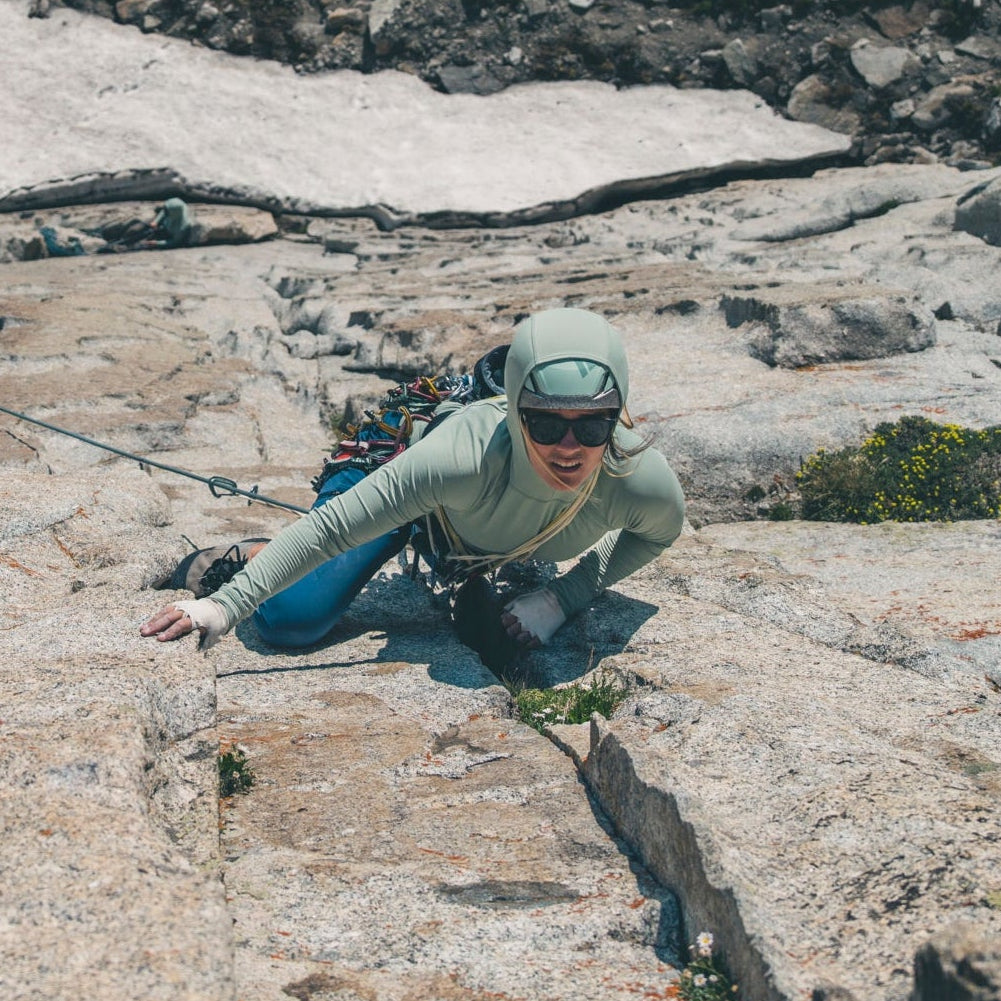
Molly climbs The Thumb on Lone Peak.

ABOUT THE AUTHOR

Molly Malone is Black Diamond Equipment’s copywriter. Her expertise in outdoor apparel and equipment comes from a decade-long love affair with backcountry splitboarding and climbing. She likes low-angle powder laps on high-avy days and sending long desert splitters.