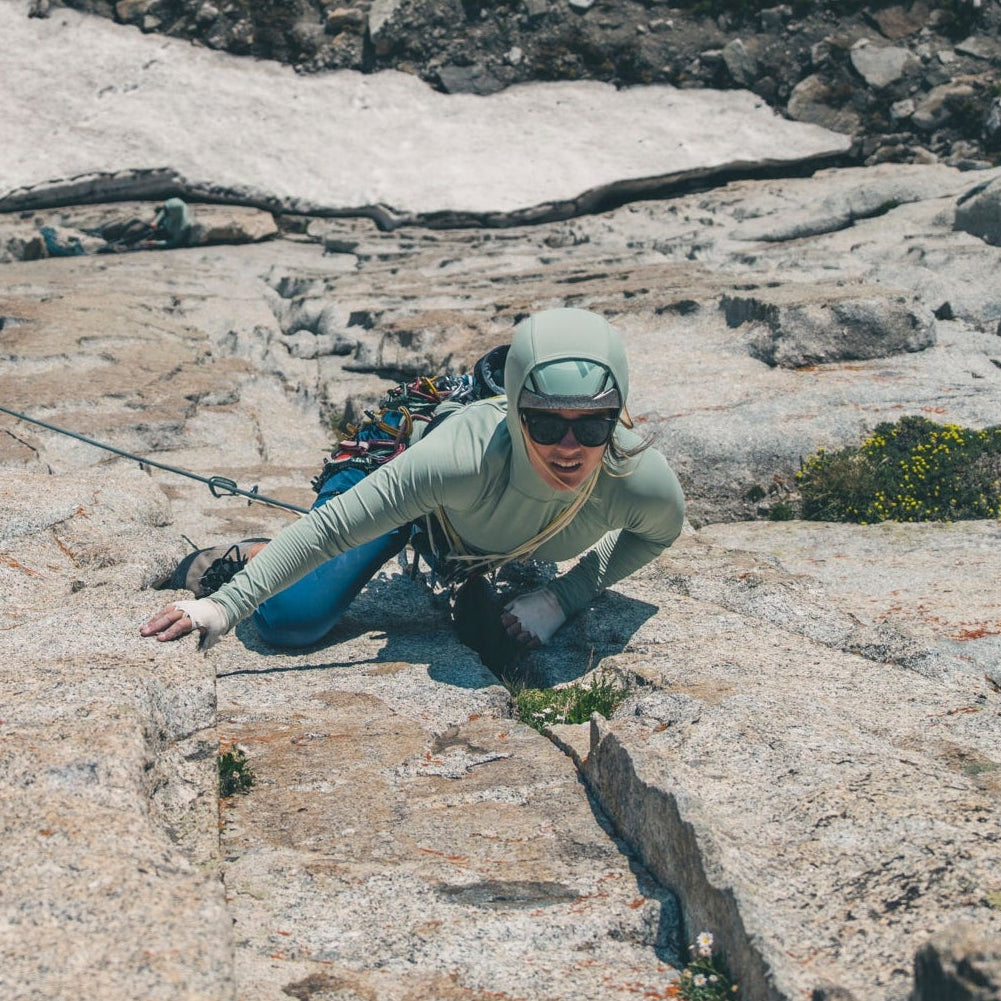
Beat the Moab crowds and head northwest for climbing, running, and bouldering in the San Rafael Swell.
Fall weather beckons peak desert season, and around the Black Diamond office, employees talk about climbing desert splitters and running sandy trails in between meetings and emails. People often head to Moab and the surrounding areas for a weekend in the desert. And we don’t blame them; the climbing access, the national and state parks, the mountain biking, and trail running are unmatched, but so are the crowds. And a perfect desert weekend doesn’t always mean sharing it with a bunch of other people.
Sometimes finding solitude among the canyon walls and mesas is just as important as sending, and the Utah desert is vast, so it’s not hard to avoid crowds; you just need to know where to look.
While we won’t share some of the most secret desert (those are best found while wandering on your own), we will share a hidden gem: The San Rafael Swell. Around the office, people talk of bouldering, climbing desert towers, cragging, and long trail runs on remote single track, all while seeing only a few people throughout the weekend.
The suggested itinerary below offers a small taste of the solitude that’s found in the Swell. To go deeper, pull out a map, pick a dirt road and start driving; you’ll find new lines to climb, trails to run, and sweet desert solitude.
WHAT IS THE SWELL
The San Rafael Swell is technically a large geological uplift in the middle of Utah spanning roughly 75 by 40 miles. ‘The Swell’ that gets talked about around the BD office is the San Rafael Swell Recreation Area, which is over 200,000 acres of protected BLM land in south-central Utah with only a few paved roads and minimal towns and services. That lack of infrastructure and geological interest means it’s full of desert climbing, from splitter Wingate to sketchy sandstone slab, world-class bouldering, and exceptional desert exploring!
CAMPING AND SERVICES
Since the Swell is BLM and remote, finding camping is usually a breeze. There are some designated campsites with pit toilets, but it is mostly unmaintained sites. Just remember, you’re in the desert, so only camp in already impacted sites and avoid making existing sites bigger.
A few towns dot the edge of the Swell. In our suggested itinerary, Orangeville is climber-friendly with some basic services, and north of the Swell is Price, a large enough town for anything you could need. It’s best to bring everything you need: water, food, fuel, and then pack everything out (including human waste—there are no acceptable cat holes in the desert environment).
If you choose to venture deep into the Swell, well off the beaten track, a 4x4 vehicle with rescue gear is suggested.
Now that we are done with the basic logistics, let’s dive into a suggested itinerary for a Swell weekend!
DAY 1: WARM UP BOULDERING IN JOE'S VALLEY
Start a long weekend by pulling on the sandstone blocks in Joe’s Valley. With nearly 200 bouldering sites—a chunk of them roadside—problems for every kind of boulder, and easy camping, you could spend a whole weekend bouldering in Joe’s. But in this guide, we are only suggesting a day since it feels a bit ‘urban’ compared to the rest of the Swell. You are only 20 minutes from Orangeville, and Hwy 29 can get busy with other recreationalists and mining traffic. After a day in the blocks and enjoying the coolness of the high desert, grab a 6-pack of beer at the Food Ranch, fill your gas tank, and hit the dirt roads deeper into the Swell.
Finding a site down Buckhorn Wash offers cozy canyon camping and puts you close to the climbing for tomorrow. Or find expansive desert views down Mexican Hat Road.
Enjoy a slow morning in the truck or van sipping a cup of coffee. Then pack your Creek bag and head down Buckhorn Wash while seeking out Pine Canyon. There’s a lot of climbing down Buckhorn, and it’s easy to pull off the road and climb a pitch for an hour or so and continue down canyon. There are a few multi-pitches that take you to the rim and a couple of chossy towers.
Pine Canyon’s approach is a short hike, and the wall offers a good density of routes that feel like Indian Creek and range from 5.8-5.12. The wall is south-facing and great for climbing in the late fall, making it easy to take in the view and lizard at the base in between climbs.
Climbing is a great way to explore the Swell and find new areas, but going for a run lets you explore even more. Give your fingers and hands a break after two days of climbing and go for a run. Waking up early to catch the sun illuminating the canyon walls is worth skipping the alarm snooze, and it’s an easy way to experience a popular trail all to yourself.
The Good Water Rim Trail offers smooth single-track running for 15 miles. With minimal elevation gain and three different trailheads you can pick you can dial in the distance for your training block. Or do the whole thing as a long out-and-back (30 miles) for a fuller day. The trail offers expansive views down toward the San Rafael River and contributing washes. The west trailhead is next to the famous ‘Little Grand Canyon’ viewpoint, probably the main reason we suggest running this early to see the sandstone tiers glow with the rising sun.
This is just a suggested itinerary for a weekend in the San Rafael Swell, and in one of the more travelled areas. But now that you're hooked, it’s easy to find more climbing and trails in the vastness of this place; It’s not hard to plan your own Swell weekend, enjoy the desert exploring, and we’ll see you out there.
Molly Malone is Black Diamond Equipment’s copywriter. Her expertise in outdoor apparel and equipment comes from a decade-long love affair with backcountry splitboarding and climbing. She likes low-angle powder laps on high-avy days and sending long desert splitters.
Choosing a selection results in a full page refresh.